12 Insights into the Future of BIM & AEC at NXT BLD Conference 2026
May 21, 2026
by Nicolas Catellier, BIM Pure's founder
NXT BLD + NXT DEV is an annual conference in London. Innovators in the AEC space assemble to show what they have been building. Although I watch the livestream and replays every year, this was my first time attending the conference in person.
You can watch the replays of the event here: https://nxtbld.com/live-stream-2026-register/
Here is what I learned.
This is the conference for the early adopters. The density of talent and achievement is high. This is for disruptors and innovators.
There were a few moments where I thought I was in somewhat of a bubble, considering the preoccupations of an average mid-size architectural firm.
Data lakes, open APIs, this isn't made for the average architect. But yet, this is what makes this conference magic: you don't have to waste time reexplaining basic concepts of AEC software disruption. Everyone here believes that the current AEC software needs to evolve.
As someone who frequently attends Autodesk University, I found it interesting to see the dominant company get the same 20-minute spot as everyone else. They are treated as equals to startups.
Every single startup I talked to is saying the same thing: since December 2025, the use of tools like Claude Code is speeding up software development. Timelines are shrinking. This is both good and bad: you can move faster, but it's easier for other companies to replicate your killer feature.
AI might be overrated for certain uses. But no one can deny the massive disruption of Claude Code and Codex.
Everyone is adding AI agent chatbots to their products.
This would have been a revolution even just 1 year ago. But now, it's becoming almost banal.
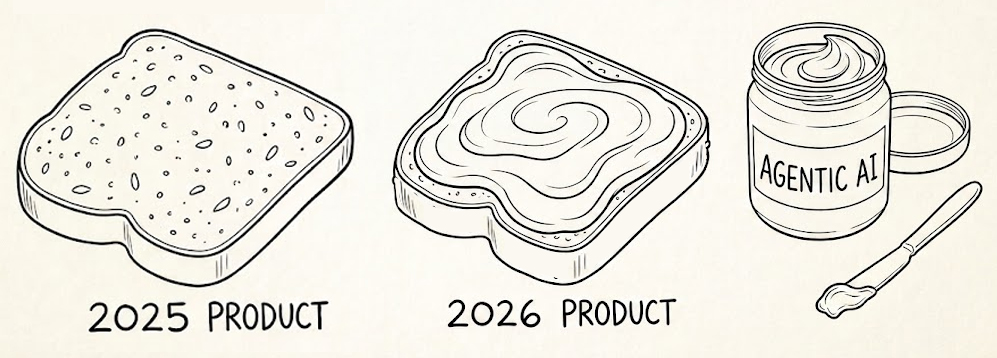
An AI agent isn't a product anymore, it's a feature.
Similar to a search bar, or the ability to use CTRL-Z to undo your work.
While AI agents are helpful, I couldn't help but think some presentations leaned too heavily on them as the core attraction. Like spreading a thick layer of agentic peanut butter on the old stack.
I don't blame companies for it: the pace of change is so fast, everyone is scrambling to catch up.
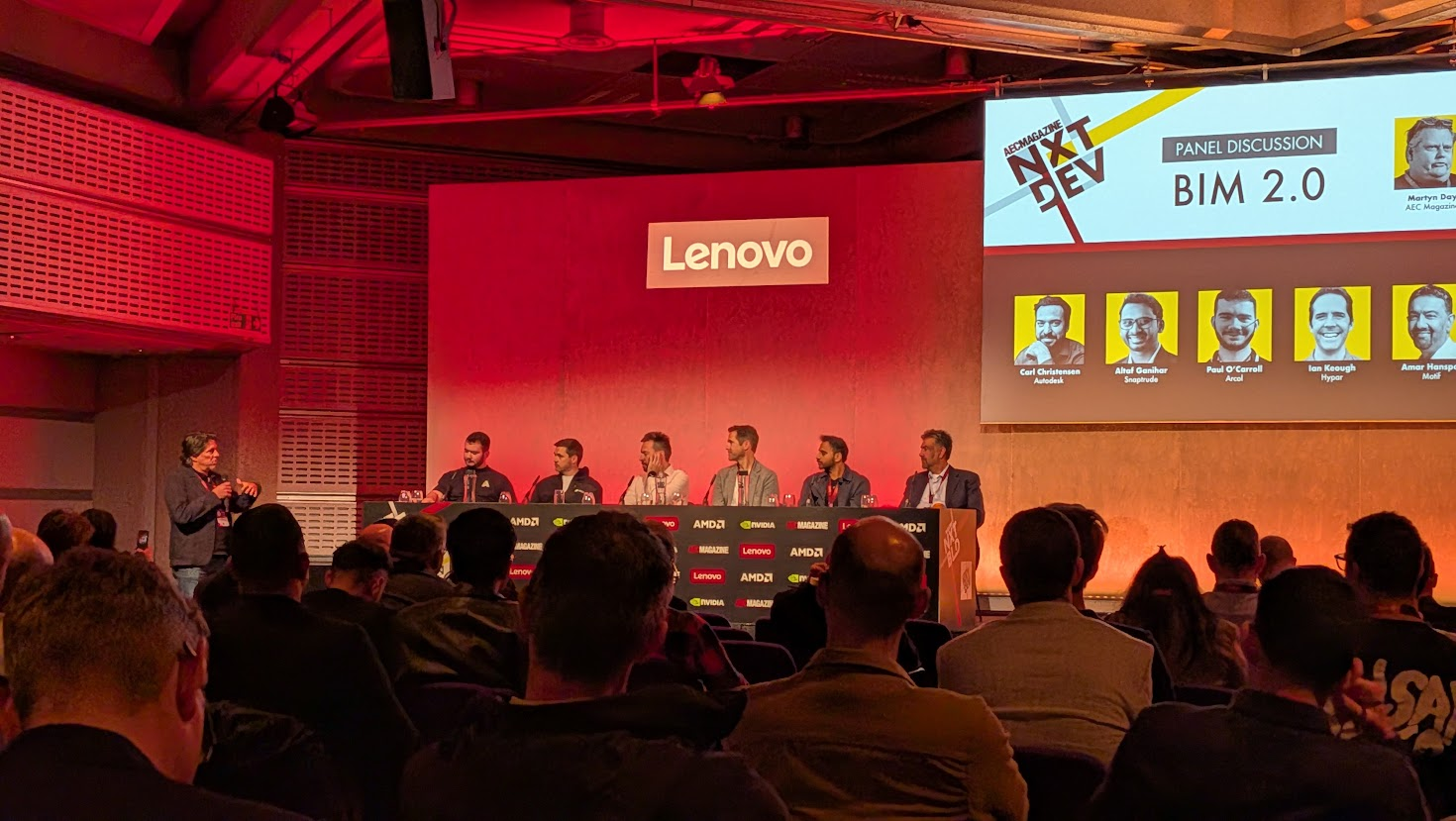
In 2022-2023, we started to see a wave of startups aiming to be the "Revit Killer" and shake up Autodesk's monopoly on BIM modeling applications.
Martyn Day called it BIM 2.0, and defined the characteristics in this article:
- Web-based
- Open API
- Real-time collaboration
- No locked files or proprietary formats
The startups "competing" in this space are: Arcol, Snaptrude, Qonic, Motif, Hypar, and... Autodesk Forma.
All these companies hate the BIM 2.0 label because they are all actually quite different from one another. Arcol is focused on early-phase, Qonic on construction documents, and Hypar on interior layouts. Other companies, such as Motif, haven't shown a lot yet.
The BIM 2.0 movement made me realize that Revit is a unique beast that's hard to replicate. Although it is an old and clunky tool, it turns out that creating a coordinated set of drawings from a 3D model is proving difficult to recreate.
In a sense, it almost fortified Autodesk's dominant position. Some of these startups are beginning to pivot toward specific use cases rather than aiming to be the elusive Revit Killer. During his presentation, Martyn Day compared the BIM 2.0 apps to babies, and Autodesk BIM 1.0 to an old man.
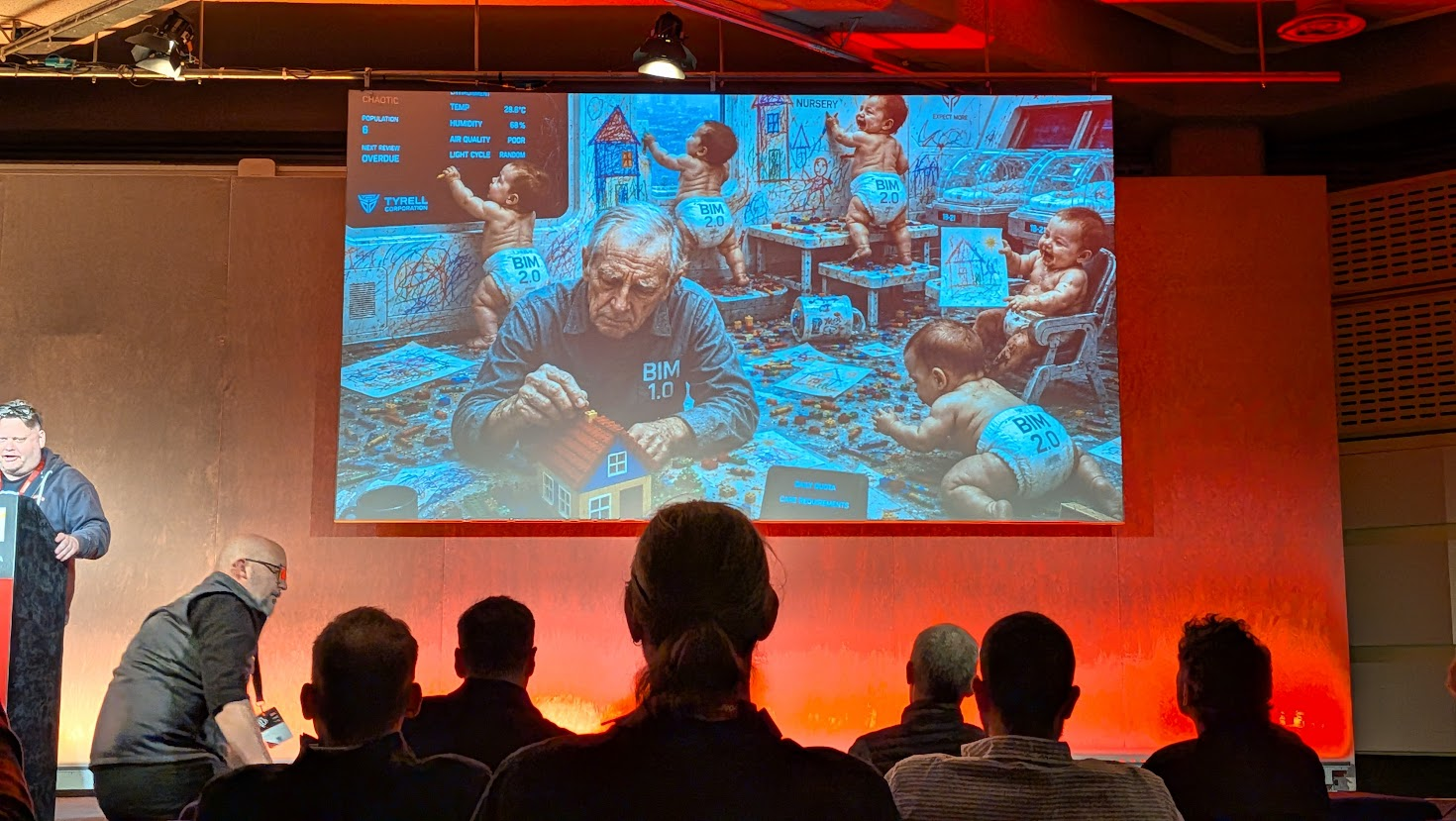
This isn't over. I am rooting for all of these companies. We need to be a bit more patient to see Revit-level capabilities throughout the entire design cycle.
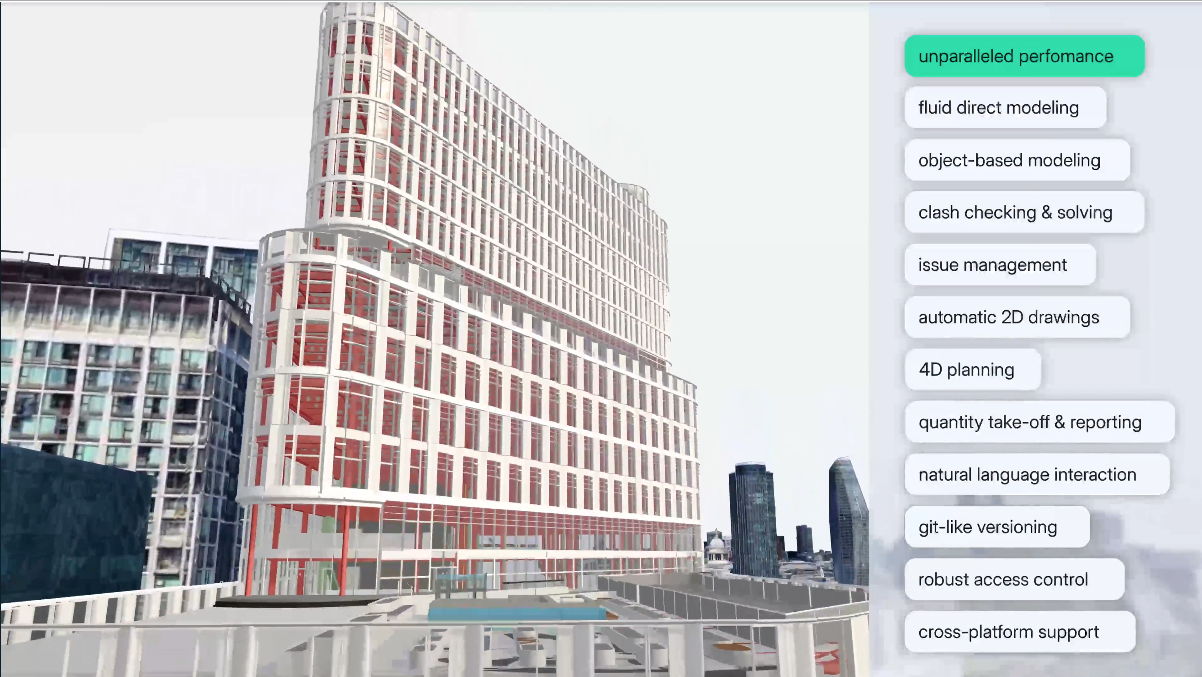
Qonic is an emerging app I didn't quite pick up in the last few years, but I was impressed with their demo. Most of the "BIM 2.0" apps adopted early-phase studies as an entry point, then are gradually building toward construction documents.
Qonic took the opposite approach, going straight to construction documents.
This thing is blazing fast. You can go from a citywide shot to a single screw zoom-in without a hint of slowdown.
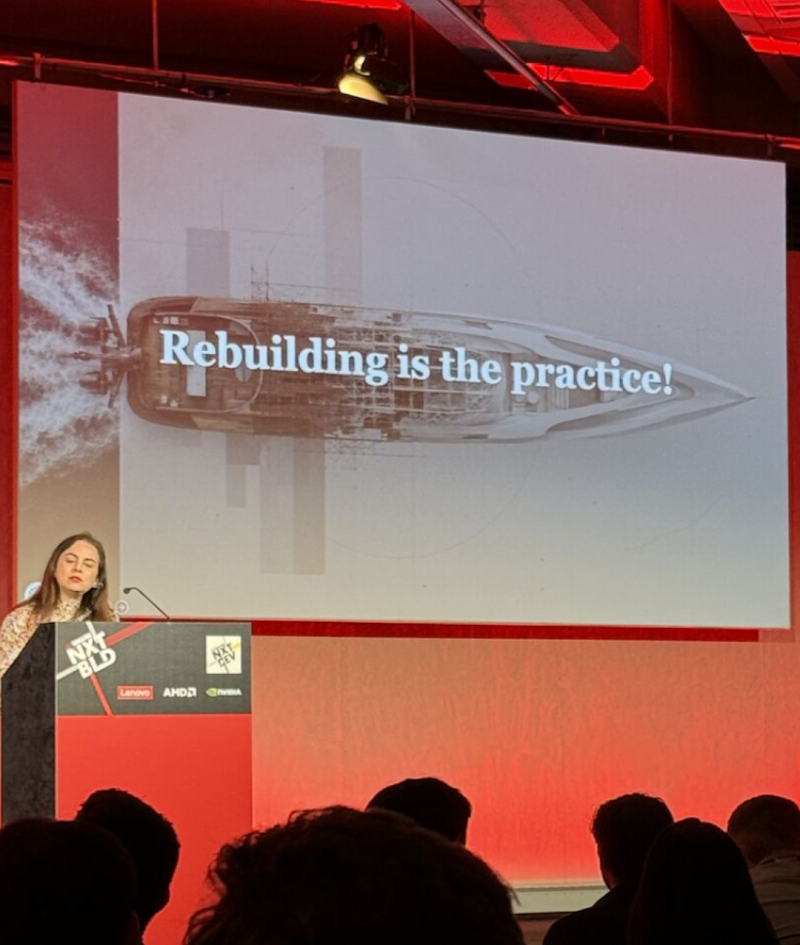
The most fascinating talk of the event was by Martha Tsigkari of Foster & Partners. Foster is building their own set of tools, including complete AI integration.
The Ship of Theseus asks a question: if every year you rebuild parts of a boat. Is it still the same boat after no original piece remains? If you rebuild your entire tech stack and design tools, do you still have the same design engine?
It raises the question: large firms such as Foster are building their own software. But how are small to medium firms supposed to compete? If you can't build the Ship of Theseus, are you condemned to sink?
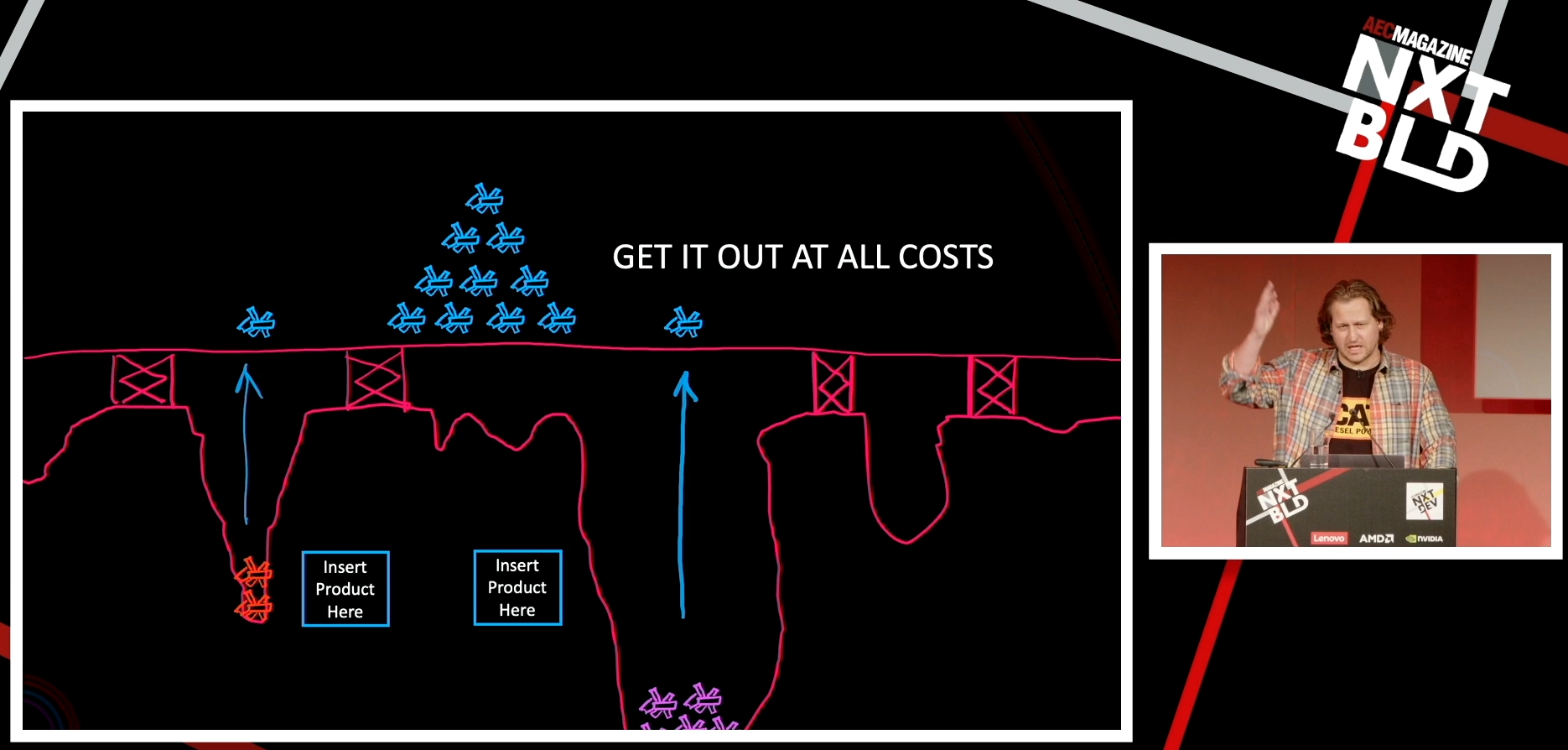
Greg Schleusner is the Director of Design Technology at HOK. During his session, he mentioned that Autodesk charges to $3 per MB (!) to get data out of Forma.
The lesson for Greg is that you need to get your data out and put it into open formats. This is what is often referred to as "data lakes" in the AEC tech world.
Frankly, this is a heavy technical discussion, so I would recommend watching Greg's talk to get the full picture. The lesson is that if you have a massive amount of data in a proprietary cloud system, you might get ripped off trying to extract it.
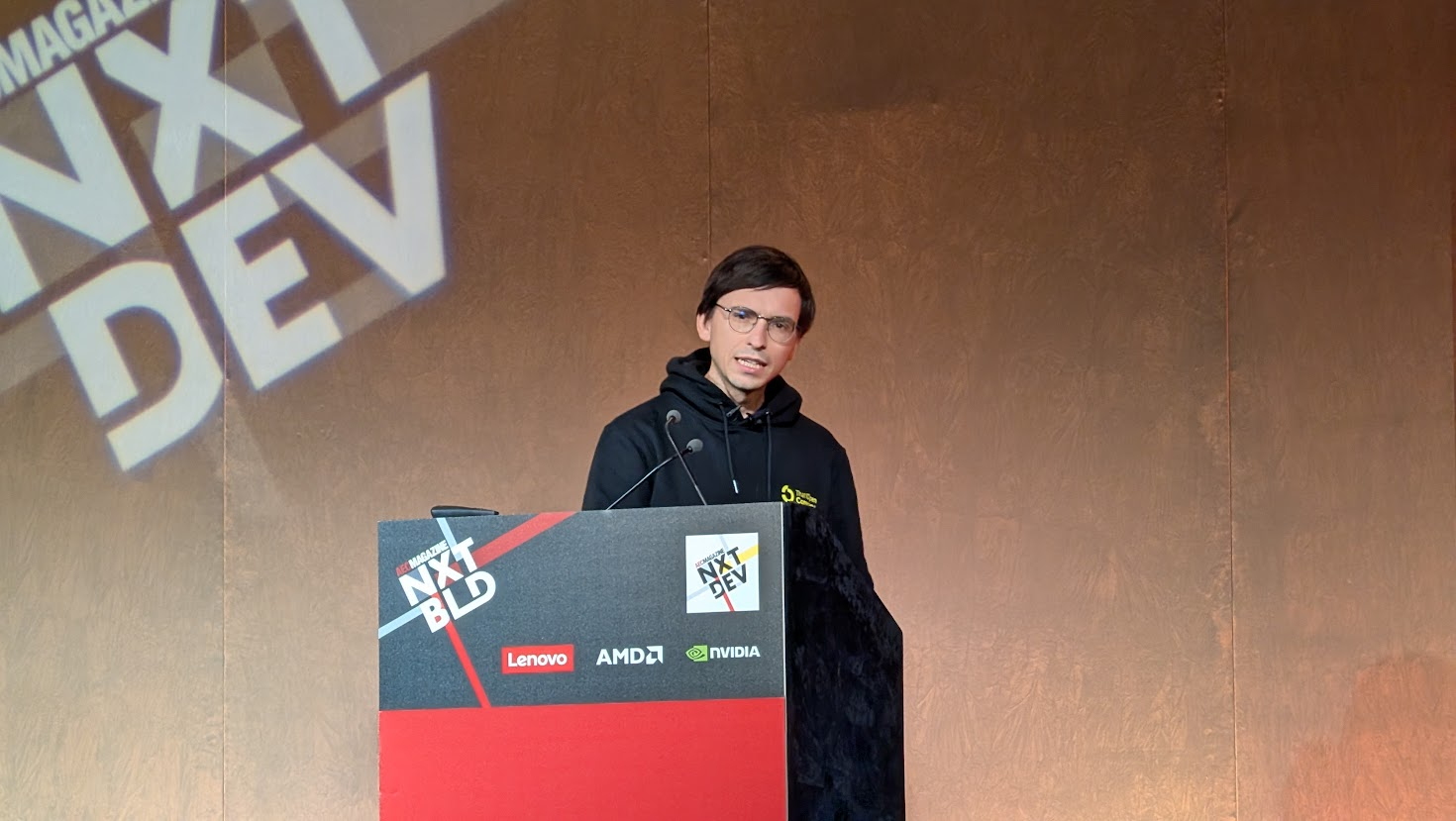
A few years ago, I interviewed Antonio Viegas of That Open Company, who was on a mission: build the equivalent of the Unreal Engine for the AEC industry. Instead of everyone building their own modeling engine, what if there were a free and common one for everyone to use?
Antonio succeeded with his bet.
And it turns out to be especially well-suited for the AI age.
Antonio showcased several companies that have been using That Open Company's open-source web modeling engine as the backbone for their work. That varies from huge firms managing public infrastructure with large development teams, to smaller teams using vibe-coding.
Antonio also announced a new cloud platform for hosting your Open Company projects if you don't want to build your own infrastructure.
Learn more about That Open Company
Jay Vleeschhouwer of Griffin Securities is a Wall Street analyst focused on the AEC industry. Autodesk never reveals the number of subscribers to its products, but Griffin managed to reverse-engineer the numbers.
The result: both Revit and AutoCAD are still growing.
This made me wonder how much of a bubble we are in if a product like AutoCAD still has such a big slice of the pie. The transition to new design tools will probably be much slower than we expect.
Jay also mentioned that they see AI disruption as probably overstated. They don't think the current tools are at high risk of being displaced by AEC AI startups in the short to medium term.
15 years ago, I remember debating whether we could eliminate drawings and sheets entirely and replace them with BIM models as deliverables. During a panel about "autodrawings", this was the most common question from the audience: why spend any energy on drawings at all?
The data isn't great for BIM as a deliverable advocate: only a tiny pocket of projects are delivered without drawings. I recommend watching this great talk by Jeffrey Pinheiro (the Revit Kid) about a successful 100% BIM project without drawings. But this is the exception.
About Autodrawings, I've got to admit I have some skepticism. Sure, some parts can be automated. But annotating a drawing is an act that often requires judgment and experience.
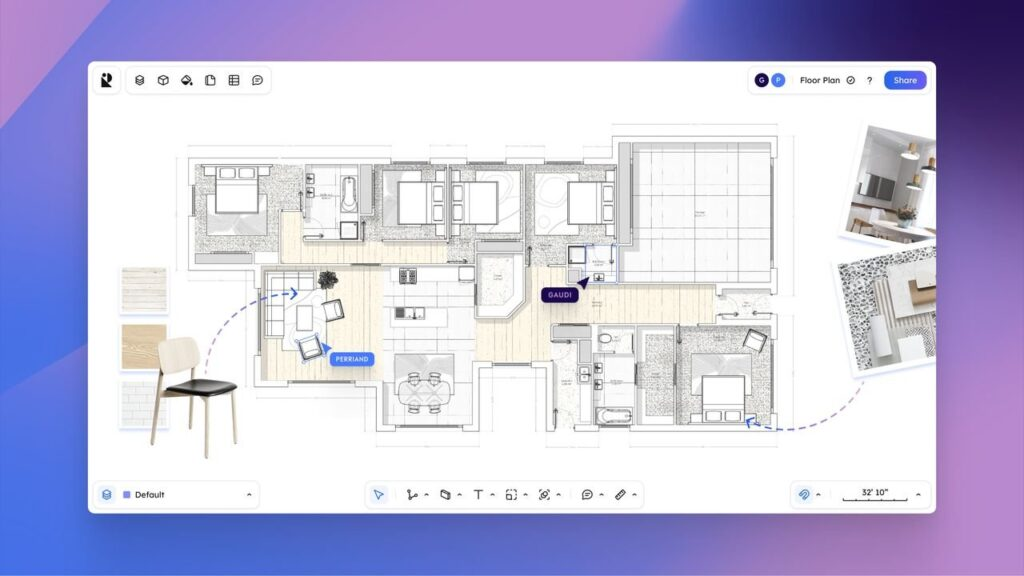
An interior designer at my co-working space told me she switched from AutoCAD to Rayon. This is a French product that does CAD in the cloud, with a great UI.
When someone outside the design tech world mentions a new product, I pay close attention. That means it has gathered enough energy to break to the general public.
During the NXT BLD presentation, Rayon's co-founder, Stanislas Chaillou, mentioned that the tool now has 100k+ users. It turns out there is a market for what they call "light BIM" and 2D drawings-focused tools.
Stanislas explicitly states that Rayon isn't designed for exceptional architecture by starchitect firms. They focus on what they call "architecture for the 90%". I would argue this number probably isn't quite accurate, as there are lots of projects requiring BIM modeling and coordination beyond starchitect projects. But I agree that for some projects, the full BIM suite is overkill.
Stanislas also insisted on the importance of end-to-end software instead of a fragmented experience. Many startups see the future of AEC as several apps, each used at a different phase of a project. But again, this doesn't make much sense for smaller to medium-sized firms. Rayon wants to cover all phases.
Just as I was saying goodbye to Martyn Day, the organizer of the conference, he told me: "London is the hub of disruption in the AEC world. People here just won't accept the status quo".
Oli Thomas from the ATN Network also told me that London is the world's architectural capital, being home to firms such as Foster, Heatherwick, Zaha Hadid, Grimshaw, Tim Fu, and many others. There is a special energy in this city that I haven't quite found elsewhere when it comes to arch tech.
There is also a high density of events and happenings, such as NXT BLD, but also ATN summits and pecha kuchas. Needless to say, it's a breath of fresh air if you are used to only attending Autodesk University.
I didn't mention every company and individual I met on my London's journey, but I am inspired by everyone's passion. Keep it on! And mind the gap.
Did you also attend the conference? What are your thoughts? Share in the comments below.
Enter your details below to get this free guide.